Building a Reliable Cold Chain From Warehouse to Retailer
A cold chain does not fail only when a freezer stops working. It can fail in the few minutes a pallet waits on a hot loading dock, during a delayed highway trip, or when a delivery crate sits outside a retail outlet before opening hours.
That is why a dependable cold chain is less about one refrigerated vehicle and more about a connected system. Warehouses, transport teams, handlers, data loggers, retail staff, and last-mile partners all have to protect the product through every handover.
For food, dairy, medicines, frozen items, flowers, and other temperature-sensitive goods, the stakes are high. Poor temperature control can lead to spoilage, safety risks, rejected shipments, customer complaints, and lost trust. In a country like India, where routes may pass through hot plains, crowded city roads, monsoon delays, and long inter-state corridors, planning matters even more.

A reliable cold chain begins inside the warehouse
The warehouse sets the condition of the shipment before transport begins. If goods leave storage already too warm, the vehicle has to fight a losing battle. Refrigerated trucks and cold boxes are designed to maintain temperature, not rapidly correct poor storage practices.
A well-run warehouse controls three things: temperature, time, and movement.
Temperature control starts with the right storage zones. Chilled dairy, frozen foods, fresh produce, vaccines, seafood, and confectionery may all need different conditions. Placing them in one generic cold room can cause damage even if the room feels cold.
Common storage bands include:
Product type | Typical storage need | Common risk |
Frozen foods | Below freezing, often around -18°C | Thawing and refreezing damage texture and safety |
Chilled dairy | Low positive temperatures | Shortened shelf life if exposed to heat |
Fresh produce | Product-specific chilled range | Freezing injury or faster ripening |
Pharmaceuticals | Strict labelled range | Compliance failure and product loss |
The exact range should always follow the product label, customer requirement, and applicable regulation. Guesswork is expensive.
Good warehouses also reduce temperature shock during picking and loading. Doors should not stay open longer than needed. Pallets should be staged in pre-cooled dispatch areas, not in ambient corridors. If products move from deep freezer to dock, the schedule should be tight and visible to everyone involved.
Practical warehouse controls include:
Pre-cooling goods before dispatch Products should reach the correct core temperature before loading begins.
Using dedicated staging zones A cold dispatch area reduces exposure while the vehicle is prepared.
Separating incompatible products Frozen goods, chilled goods, ethylene-producing fruits, and odour-sensitive items should not mix without control.
Checking door discipline Fast entry and exit protect the room from temperature rise and moisture build-up.
Keeping airflow clear Stacked goods should not block evaporators or air circulation paths.
The warehouse team also needs clear release rules. If a pallet does not meet the required temperature, staff should know whether to hold, recheck, reject, or escalate it. Without a simple rule, pressure to dispatch can override product safety.
Refrigerated transport protects the product between handovers
Refrigerated transport is the most visible part of the cold chain, but it works only when selected and used correctly. The right vehicle depends on product type, distance, load size, number of delivery stops, and expected outside temperature.
A short city route with chilled items may need a small insulated vehicle with active cooling. A long inter-state frozen shipment may need a reefer truck with strong refrigeration capacity, continuous monitoring, and backup procedures. Multi-temperature loads may need partitioned compartments, separate airflows, or separate vehicles.
Before loading, the vehicle should be pre-cooled. Loading warm goods into a warm truck and then switching on the unit is a common mistake. It gives the product unnecessary heat exposure and strains the system.
The loading plan matters just as much as the vehicle.
Goods should be arranged so cold air can move around the load. Pallets pushed tightly against walls or blocking the air chute can create hot pockets. Heavy items should not crush delicate produce. Mixed delivery orders should be loaded in a sequence that reduces door-open time at each stop.

Strong refrigerated transport also depends on route planning. The fastest route on paper may not be the safest route for cold goods. Traffic bottlenecks, border checks, road quality, fuel access, parking restrictions, and delivery time windows all affect risk.
A dependable transport plan should cover:
Vehicle readiness Check refrigeration unit performance, door seals, fuel level, drainage, cleanliness, and calibration records before dispatch.
Loading sequence Place first-drop goods near the door only if this does not expose other products for too long.
Temperature setting Set the unit according to product need, not driver comfort or a generic number.
Door opening rules Limit door-open time and avoid opening the cargo area during breaks.
Contingency planning Drivers should know whom to call and where to go if the refrigeration unit fails.
For longer routes, rest stops should be planned. A driver parking in direct afternoon sun for several hours can increase the burden on the cooling unit. Safe shaded parking, access to service support, and planned check-ins make the route more reliable.
The vehicle is not just a box on wheels. It is a moving cold room with vibration, door openings, outside heat, human handling, and delivery pressure. Treating it that way helps reduce avoidable failures.
Temperature monitoring turns assumptions into evidence
A cold chain cannot rely on “the truck felt cold” or “the driver checked it once.” Temperature monitoring creates proof that products stayed within the required range.
There are two broad types of monitoring: real-time tracking and trip-based logging.
Real-time systems can send alerts when temperature moves outside the accepted range. This helps teams act during the journey, not after the shipment arrives damaged. Trip-based loggers record the temperature history and are checked at delivery or after return. They are useful for audits, claims, and customer assurance.
Both have value. The right choice depends on product risk, regulation, value of the load, journey length, and customer expectations.
Monitoring should measure the condition of the product environment, not only the refrigeration unit. A truck display may show the air return temperature near the unit. That does not always reveal what is happening near the door, in the middle of a dense pallet stack, or inside an insulated shipper.
For high-risk consignments, place sensors where problems are likely:
Near doors, where warm air enters during unloading
In the middle of the load, where airflow may be weak
Near the warmest expected point in the vehicle
Inside sample cartons or validated insulated boxes when required
A useful monitoring plan answers four questions.
What is the acceptable temperature range?
This should come from the product requirement, not a rough industry habit.
How often is temperature recorded?
A high-risk route may need frequent records. A short, low-risk trip may need less.
Who receives alerts?
An alert has little value if it goes to someone who cannot respond.
What happens after an excursion?
The team should have a decision process for quarantine, inspection, release, rejection, or technical review.
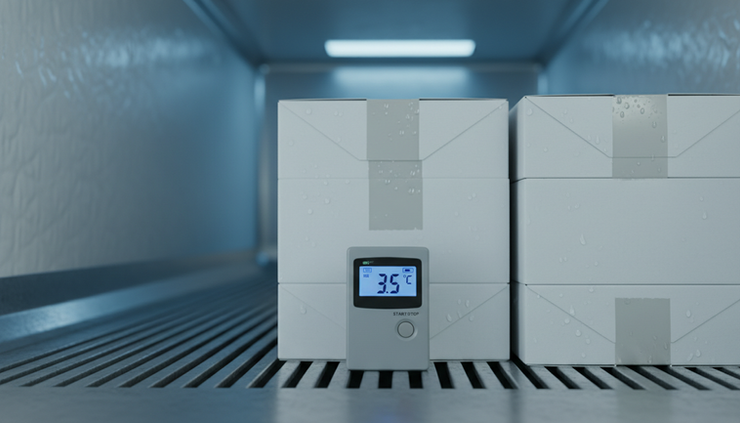
Records should be easy to review. Handwritten logs can work for simple operations, but they are prone to gaps and errors. Digital systems reduce manual work and help teams spot repeated problems, such as one route that always warms up near the final delivery or one dock where loading takes too long.
Temperature data is more than a compliance file. It is a problem-solving tool. If deliveries to one retailer regularly cross limits, the data may show that the cargo door stays open during multi-drop unloading. If frozen items arrive with frost damage, records may reveal temperature cycling. If one vehicle performs worse than others, maintenance can inspect the unit before a major failure.
Reliable cold chain management improves when teams use data to fix root causes, not just defend claims.
Efficient handling reduces hidden temperature loss
Many cold chain failures happen during handovers. Goods move from cold room to loading dock, from truck to cross-dock, from vehicle to store room, and from store room to display cabinet. Each step can add heat exposure if staff do not work to a clear process.
Efficient handling does not mean rushing carelessly. It means preparing the space, people, equipment, and paperwork so goods do not wait unprotected.
Before a truck arrives, the receiving team should know:
What product is coming
What temperature range applies
How many cases or pallets to expect
Where the goods will go immediately
Who will check and sign off the delivery
What to do if the temperature is outside range
This reduces idle time. A loaded vehicle should not wait outside while staff search for the right key, clear space in the cold room, or locate the receiving manager.
Insulated packaging can help during short exposure periods, especially for small shipments and last-mile drops. Gel packs, phase change materials, insulated crates, and thermal liners must be selected for the product and route. A frozen gel pack may damage chilled produce. A poorly sealed insulated box may give a false sense of safety.
Handling equipment also plays a role. Dock levellers, strip curtains, fast doors, pallet jacks, clean trolleys, and covered loading areas all reduce risk. In many Indian locations, a fully temperature-controlled dock may not be available. Even then, simple practices help:
Park as close as safely possible to the receiving point
Keep goods shaded during transfer
Move smaller batches quickly rather than exposing the full load
Use clean insulated crates for store-to-shelf movement
Avoid placing cold goods on hot floors or near open drains
Store returned or rejected goods separately
Food safety and pharmaceutical compliance both depend on hygiene as well as temperature. Vehicles, crates, pallets, and cold rooms should be clean and free from strong odours, pests, spills, and standing water. Temperature control cannot compensate for poor sanitation.
People need training that is practical, brief, and repeated. Staff should know why door-open time matters, how to read a temperature device, how to identify damaged packaging, and when to stop a shipment from moving further. Training should include drivers, loaders, warehouse staff, and retail receivers. A cold chain is only as strong as the least prepared handover point.
Last-mile delivery decides what the customer receives
The last mile is often the hardest part of the cold chain. Vehicles make multiple stops. Roads are crowded. Delivery windows are narrow. Retail outlets may have limited receiving space. Small-format stores may not have a dedicated cold dock. Heat exposure can rise quickly, especially in summer or during afternoon deliveries.
A strong last-mile plan groups deliveries by temperature need, route density, order size, and receiving readiness. Sending chilled dairy, frozen desserts, and ambient goods in the same vehicle without proper separation can create avoidable risk.
For retail delivery, the final handover should be short and controlled. The receiving person should check product condition, quantity, packaging integrity, and temperature where required. If there is a mismatch, both sides should record it immediately.
Last-mile reliability improves when dispatch teams build routes around real conditions, not only distance. A 5 km route through heavy city traffic may be riskier than a 15 km route on a clear road. Delivery to markets, malls, hospitals, restaurants, and kirana outlets each has different constraints.
Good last-mile cold chain practices include:
Confirmed delivery windows Goods should arrive when someone is ready to receive them.
Smaller insulated units for multi-drop routes Opening one crate should not expose all orders.
Temperature checks at delivery Simple checks help verify that the journey stayed within limits.
Failed delivery rules If a retailer is closed, the driver should not improvise by leaving goods outside.
Return handling Returned cold goods need clear rules to prevent unsafe resale or mixing.

The last mile also needs accountability. Drivers should not carry the full burden alone. Dispatchers, route planners, warehouse teams, and retailers all affect the result. If the store has no cold storage space ready, the best vehicle cannot save the shipment for long. If dispatch loads goods late, the route may begin with pressure already built in.
Retailers complete the chain by quickly moving goods into the right storage or display. A chilled product delivered correctly can still lose shelf life if it sits near the billing counter or waits in a back room without cooling. Store teams should follow stock rotation, keep display units at the right temperature, avoid overloading cabinets, and separate damaged packs.
The customer sees only the final product. They do not see the pre-cooling, the logger data, the route plan, or the loading discipline. That final pack on a retail shelf carries the result of every upstream decision.
The cold chain works best as one connected process
Building a reliable cold chain from warehouse to retailer requires discipline at every stage. The warehouse must store and release goods correctly. Refrigerated transport must match the product and route. Temperature monitoring must provide usable evidence. Handling must reduce exposure during handovers. Last-mile delivery must protect goods until they enter the retailer’s cold storage or display.
The best systems are not always the most complex. They are clear, consistent, and checked often. Start with the product requirement, map every point where temperature can change, assign responsibility, and use data to correct weak spots.
A dependable cold chain protects more than a shipment. It protects shelf life, safety, compliance, and customer trust. The work happens in many small moments, from closing a cold-room door on time to acting on a temperature alert before a product is at risk. Those small moments decide whether the cold chain holds.


