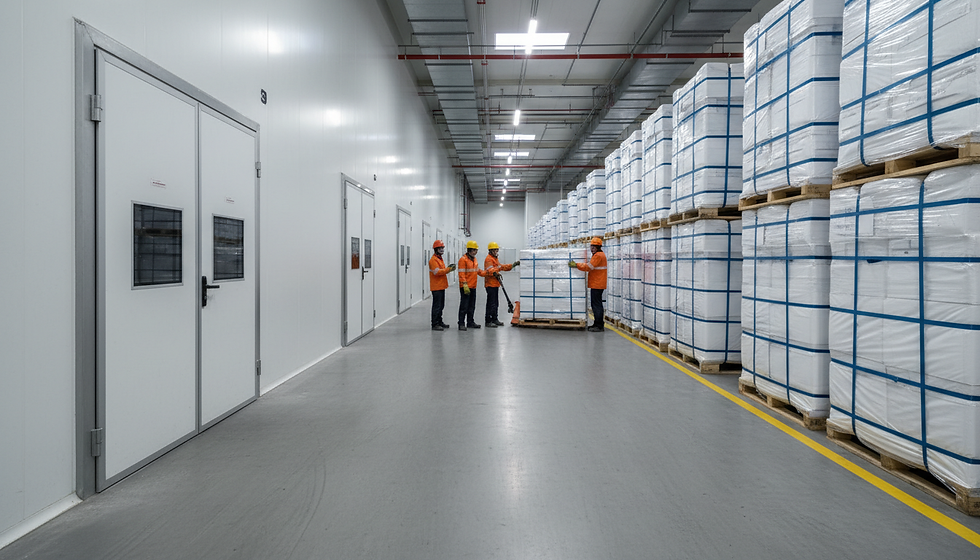
Why Temperature Control Is Essential in Modern Logistics
A shipment can look perfect from the outside and still arrive damaged. For many products, the issue is not rough handling or late delivery. It is a few degrees of heat, cold, or humidity at the wrong time.
Temperature control has become one of the most important parts of modern logistics because supply chains now carry more sensitive goods over longer distances. Fresh food, vaccines, speciality chemicals, cosmetics, flowers, dairy products, seafood, frozen items, and some electronics all need stable conditions from storage to delivery.
When temperature slips outside the right range, quality can fall quickly. A frozen product may thaw and refreeze. A medicine may lose its effectiveness. A fruit shipment may ripen too fast. A chemical product may become unsafe or unusable. The loss is not always visible at first, which makes control and proof even more important.
Good temperature management protects product value, reduces waste, and helps businesses deliver consistent quality from warehouse to destination.

Temperature control protects products that are sensitive by nature
Some goods can handle small delays or mild weather changes. Temperature-sensitive products cannot. Their quality depends on staying within a defined range throughout the journey.
Food is the easiest example. Fresh vegetables, meat, seafood, ice cream, dairy, bakery creams, and ready-to-eat meals all respond to temperature changes. Heat speeds up spoilage. Poor freezing affects texture. Excess moisture can damage packaging and encourage mould. In India, where shipments may pass through hot highways, crowded distribution points, and long unloading windows, these risks grow quickly.
Pharmaceuticals are even more demanding. Many medicines, vaccines, diagnostic samples, and biological products need strict storage and transport conditions. If these products face heat or freezing beyond their allowed limits, they may not perform as intended. That creates both commercial loss and serious safety concerns.
Other sectors also depend on controlled transport:
Cosmetics and personal care products
Creams, serums, lipsticks, and oils can separate, melt, or change texture when exposed to heat.
Chemicals and industrial materials
Some products need steady conditions to remain stable, safe, or ready for use.
Flowers and plants
Heat reduces freshness, shortens shelf life, and affects appearance.
Electronics and precision parts
Certain components can be affected by condensation, humidity, or rapid temperature shifts.
The common thread is simple. The product’s condition depends not only on where it goes, but also on the environment it travels through.
This is why packaging alone is not enough. Insulated boxes, gel packs, dry ice, or thermal blankets can help, but they work best as part of a larger temperature-control plan. The vehicle, warehouse, transfer point, handling process, and delivery timeline all matter.
Breaks in the cold chain create hidden losses
Temperature-controlled logistics is often called the cold chain, but the idea applies to controlled heat, ambient ranges, frozen transport, and humidity-sensitive goods too. The real goal is continuity. The product should move through every stage without harmful exposure.
A break can happen almost anywhere:
During picking inside the warehouse
While goods wait on a loading dock
When a reefer truck is not pre-cooled
During transfer between vehicles
At a cross-dock facility
While waiting for customs, inspection, or delivery acceptance
During last-mile delivery in high outdoor temperatures
Many losses happen during short waiting periods. A carton may spend only 20 minutes outside a cold room, but if the outdoor temperature is high, that exposure may be enough to affect sensitive goods. A freezer truck may be working properly, but if the doors stay open too long at several stops, the internal temperature can rise again and again.
The difficult part is that damage may not show immediately. A product may still look normal when received. Later, it may spoil early, fail a quality check, trigger a customer complaint, or require disposal. Without proper records, it becomes hard to identify where the failure occurred.
The most expensive temperature failures are often the ones discovered late, after storage, handling, and delivery costs have already been paid.
For businesses, these hidden losses can spread across the supply chain. A retailer may reject a shipment. A distributor may lose trust in a supplier. A manufacturer may need to replace goods at its own cost. If the product is regulated, the business may also need to provide evidence that it followed the required handling conditions.
That is why temperature control is not only a transport issue. It is a quality issue, a compliance issue, and a customer trust issue.

Modern logistics needs visibility, not guesswork
In the past, many teams relied on basic checks. Drivers looked at reefer settings. Warehouse staff checked thermostats. Receivers inspected products on arrival. These steps still matter, but they do not tell the full story.
A shipment may leave at the right temperature and arrive at the right temperature, yet face unsafe conditions in between. That gap is where visibility matters.
Modern temperature control uses a mix of equipment, monitoring, and process discipline.
Refrigerated vehicles keep conditions stable
Reefer trucks, insulated vans, and refrigerated containers are designed to hold goods within defined temperature ranges. The right vehicle depends on the product, route, climate, load size, and delivery pattern.
Frozen goods need different settings from chilled foods. Medicines may need a narrow band such as controlled room temperature or refrigerated storage. Mixed loads need careful planning so one product’s needs do not harm another.
Pre-cooling is a basic but critical step. Loading chilled goods into a warm vehicle forces the cooling unit to work harder and exposes products to avoidable risk. The vehicle should reach the required temperature before loading begins.
Monitoring devices create a record
Temperature data loggers and sensors track conditions during transit. Some store data for review after delivery. Others transmit live alerts when readings move outside the approved range.
These records help answer practical questions:
Did the shipment stay within range?
When did a temperature excursion start?
How long did it last?
Which route, vehicle, or handling point was involved?
Can the product still be accepted, or must it be rejected?
For high-value or regulated goods, this evidence can be as important as the delivery itself. It supports quality checks, audits, insurance claims, and customer communication.
Standard handling reduces human error
Equipment can fail if people use it poorly. Strong temperature control needs clear handling rules.
For example:
Keep cold room doors closed when not in use
Stage goods only when the vehicle is ready
Load high-risk products first or last based on route needs
Avoid long dock waiting times
Check packaging condition before dispatch
Train handlers on acceptable exposure limits
Record exceptions instead of relying on memory
Human error often comes from unclear ownership. If no one knows who must check the vehicle temperature, confirm packaging, start the logger, or approve loading, steps get missed. A simple checklist can prevent expensive mistakes.
Good temperature control reduces waste and protects margins
When temperature-sensitive products fail, the loss is rarely limited to the item itself. The business may also pay for return freight, replacement, disposal, investigation, lost shelf space, and customer support. If the shipment was urgent, the replacement may cost more to move than the original.
For food supply chains, better temperature control helps reduce spoilage. That matters in a country like India, where heat, distance, and infrastructure gaps can make fresh distribution difficult. Every avoided rejection means less waste and better use of production, fuel, packaging, labour, and storage.
For pharmaceutical and healthcare supply chains, temperature control protects patient safety and regulatory confidence. Products must reach hospitals, pharmacies, clinics, and distributors in the right condition. A weak link during transport can put the whole chain at risk.
For retail and e-commerce, it supports customer experience. A customer who receives melted chocolate, spoiled dairy, wilted flowers, or damaged skincare is unlikely to focus on the complexity of logistics. They see a failed promise.
Consistent temperature control helps businesses protect three things at once: product quality, operating cost, and reputation.
It also makes planning more reliable. When teams can trust their cold chain, they can expand service areas, handle premium products, reduce safety stock, and accept stricter customer requirements. That does not mean risk disappears. It means the business can manage risk with data and process instead of luck.
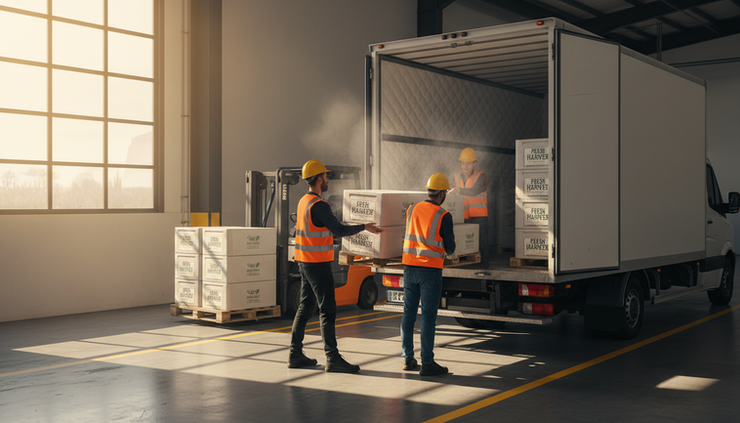
The weakest point is often the handover
A temperature-controlled shipment does not move as one smooth line. It passes through several hands. Each handover creates risk.
A typical journey may include:
Production storage
Primary warehouse
Loading dock
Long-haul transport
Regional hub
Sorting area
Last-mile vehicle
Customer receiving area
Every point needs the same level of care. If a warehouse maintains perfect conditions but the last-mile vehicle has no cooling capacity, the shipment can still fail. If a reefer truck stays within range but goods wait outside during receiving, the risk shifts to the final point.
Handover failures often come from timing gaps. The vehicle arrives before the receiving team is ready. The dock is full. Paperwork takes too long. The product is unloaded first, then checked later. By then, sensitive goods may have sat in the wrong environment.
Better coordination can reduce these risks. Dispatch teams can share estimated arrival times. Receiving teams can prepare cold storage space before unloading. Drivers can record waiting time. Supervisors can set rules for when a shipment must stay inside the vehicle until the dock is ready.
The final mile deserves special attention. It often involves frequent stops, smaller vehicles, traffic delays, and direct customer interaction. Door openings become more frequent. Routes may change. Weather exposure increases. A plan that works for a full truckload may not work for a multi-stop delivery route.
Strong last-mile temperature control may include:
Route planning based on product sensitivity
Separate packaging for high-risk orders
Smaller delivery batches
More frequent temperature checks
Clear receiver instructions
Proof of delivery with condition records
The goal is not to make every shipment complex. The goal is to match the level of control to the risk.
A practical temperature-control plan starts before dispatch
The best logistics teams treat temperature control as a planned system, not an emergency response. They define what each product needs, then build transport conditions around that requirement.
A good plan starts with product classification. Each product should have a clear temperature range, handling limit, packaging requirement, and escalation rule. Teams should know which goods are frozen, chilled, controlled ambient, heat-sensitive, or humidity-sensitive.
Next comes packaging. The right packaging depends on route length, weather, handling points, and delivery expectations. Passive packaging, such as insulated containers and coolants, can work well for shorter or controlled routes. Active systems, such as refrigerated vehicles and containers, are better for larger loads or longer journeys.
Then comes route and time planning. Temperature-sensitive goods should not sit idle for long periods. Avoiding peak heat during loading, reducing unnecessary stops, and planning direct routes can make a clear difference. In hot regions, even the time of day can matter for fresh and frozen goods.
Maintenance is another essential part. Cooling units, door seals, sensors, batteries, insulation, and vehicle bodies need regular checks. A refrigerated truck with poor seals or a weak cooling unit may appear serviceable until the load is already at risk.
Training ties the system together. Staff should understand why temperature rules exist, not only what the rules say. When people know the cost of leaving doors open or delaying a chilled load, they take the process more seriously.
A practical plan should answer these questions:
Question | Why it matters |
What temperature range does the product need? | Sets the basic transport requirement |
How long can the product tolerate exposure? | Guides loading and unloading decisions |
What packaging is required? | Protects goods during transfers and delays |
Who checks and records the temperature? | Creates ownership and proof |
What happens if the range is breached? | Prevents confusion during exceptions |
How is equipment maintained? | Reduces failure during live shipments |
Clear answers reduce pressure during dispatch. They also help teams respond faster when something goes wrong.

The takeaway for modern supply chains
Temperature control is no longer a specialist concern limited to frozen food or vaccines. It is part of reliable logistics for any product that can be damaged by heat, cold, humidity, or time outside its safe range.
The right approach combines suitable vehicles, protective packaging, live or recorded monitoring, trained people, and careful handovers. Each part supports the others. A good truck cannot fix poor loading. A strong package cannot cover an unmanaged delay. A sensor has limited value if no one acts on the alert.
The businesses that handle temperature well protect more than cargo. They protect trust. They reduce avoidable waste, support compliance, and deliver products in the condition customers expect.
A shipment is only successful when it arrives on time and in the right condition. For sensitive goods, that condition depends on temperature from the first warehouse door to the final destination.